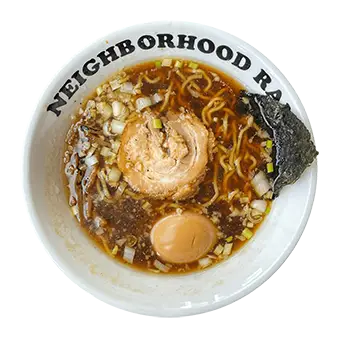
In this issue: The fight for the user interface. $10 million for AI journalism. Tech policy expert Frederike Kaltheuner on how to escape a captured ecosystem. Plus: Watching Tom Vaillant’s local research tool is like watching magic.

Hi, I'm Ole Reissmann, a journalist who builds things. I'm the first Director of AI at SPIEGEL. Before that: podcasts, news product development, platform strategy. I write about AI and journalism and send a newsletter you might enjoy.
A six-step toolkit for newsrooms that want to reach younger audiences: localize research, prototype an idea, set AI guardrails, write a road map, stress-test the MVP, then ship and read the signals. Built from an eight-month sprint with 12 US newsrooms. (News Product Alliance)
The SPUR coalition now has 80 members. New York Times, Funke, The Economist and 40 others joined. (Charlotte Tobitt, Press Gazette)

Three Questions with Becca Aaronson, News Product Alliance

Four Questions with Evan Hirsch, OpenAI

Four Questions with Agnes Stenbom Swedling, Nordic AI Journalism

Three Questions with Shuwei Fang, Harvard-Fellow

Four Question with Jaemark Tordecilla, Journalist and Advisor
Three Questions with Tess Jeffers, Wall Street Journal

Three Questions with Joe Amditis, Center for Cooperative Media

Three Questions with Rubina Fillion, New York Times
Three Questions with Elisabeth Gamperl, dpa
Tarbell Center for AI Journalism, a nonprofit close to the AI safety movement, will spend $10 million on AI coverage by the end of 2027. Kevin Roose and Casey Newton get $480k for their new NPR video podcast “Machine Gods.” (Max Tani, Semafor)
Search often runs in two steps: grab candidates, then let a model reorder the top results. Doug Turnbull tried a new idea for the second step: an LLM turns each query into about ten yes/no questions, and a small decision model like Jev checks every result against them.
LLM Wiki v2 is another ready-to-use take on Karpathy’s LLM Wiki idea: drop in documents, and it files them into folders of Markdown notes, then answers questions with citations. It’s similar to SecondBrain, but a small classifier (hello, Jev) makes the filing decisions, so the big model isn’t called for every step.
Stochastic Parrots
After an influential paper criticising AI hype and describing fallacies of generative AI. Perfect back in 2021. While the critique still stands, newer models and use cases make you seem stuck in the past when using the expression. Dangerzone Bender, Emily M.; Gebru, Timnit; McMillan-Major, Angelina; Mitchell, Margaret (2021): On the Dangers of Stochastic Parrots: Can Language Models...
PhotoCraft is an open-source Photoshop rebuild: layers, masks, adjustment layers, type, vectors, real PSD files, and an MCP server so AI agents can drive it too. Early alpha.
The JournalismAI Festival is back in November, and registration is open. London in person or free online. Sessions range from AI agent workflows for investigations to what media IP is actually worth.
The Agent Layer: My Keynote at Mediatech Hub Conference 2026
I was invited to speak at the Mediatech Hub Conference in Babelsberg, Potsdam. Here’s my script, more or less what I said on stage, and some links. Hi, thanks you for having me. Let’s start with a shoutout: Next week, "Droneland" starts streaming on Telekom’s MagentaTV. It's set in a near future where artificial intelligence...

Is Claude getting dumber after launch? livenerf runs and ranks the same task over and over again to find out.
FLUX 3 Image lets you compose from scratch with bounding boxes, make multi-element edits, render in 4K, and let agents plan layouts.
Audionaut is a free, open-source multitrack audio editor that Claude and other AI agents can control via MCP.
If you want the internet to be a wondrous place for quiet, odd and poetic things, you might just have to write some HTML: