/ / THEFUTURE /
In this issue: The Second Brain dream goes mainstream. Google’s AI Overviews get it wrong one in ten times. Martin Schori on why newsrooms are still solving the wrong problems. Plus: an X-Files watch planner and a New York City queue camera.
What we’re talking about: For the past few years, we’ve been trading notes in a small Signal group: the dream of a Second Brain. A personal knowledge database, notes, bookmarks, wiki-style. Everything connected to everything else.
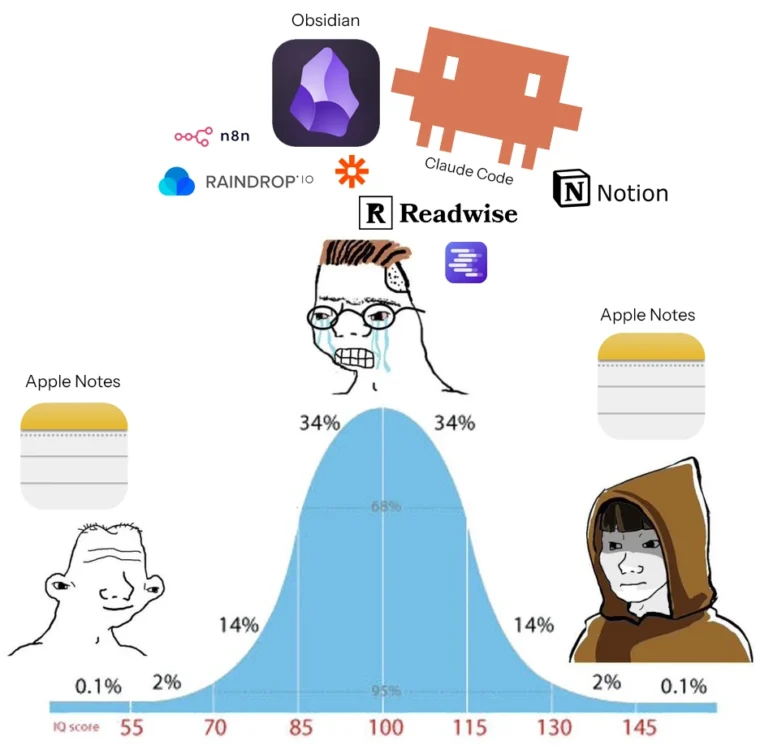
What had crystallized most recently: plain text files, lightly formatted, internally linked, held together by a program called Obsidian. Like Notion, but with your own files, offline, no subscription. Obsidian doesn’t have its own AI, but connectors let you plug one in. Add a RAG layer on top, your notes embedded for AI retrieval. Nerdy stuff.
And then suddenly it’s everywhere. LinkedIn buzzing, YouTube tutorials, the bros on Twitter losing their minds: AI researcher Andrej Karpathy wrote about his setup: Obsidian and Claude Code. The last remaining hurdles, organizing and maintaining the notes, gone. Claude Code handles it.
He didn’t get into specifics, which opened the floodgates for tutorials. Never mind that this burns through tokens and maybe doesn’t scale much beyond a few hundred notes. But there’s a tutorial for that as well.
Once assembled, your external knowledge will spark new thoughts on its own and make unthinkable connections. That is, if your brain is wired like that and you actually enjoy feeding your digital twin. If this doesn’t fit you, don’t despair. You can always come up with your own system.
What else I’ve been reading:
And now: He built user-facing AI experiments at Sweden’s Aftonbladet when we were still fumbling through our first prompts. He wrote a book about AI in the newsroom (I even have a tiny cameo in it). And now he’s transitioning to Swedish news startup Hint. Fellow futurists, please meet Martin Schori.
Three Questions with Martin Schori

Martin Schori is Director of AI & Innovation at Aftonbladet. Later this spring, his book “AI in the Newsroom: Everything You Need to Become Tomorrow’s Journalist” will be published in both Swedish and English.
Is there a quote that's on your mind lately?
A worn but often-quoted line about AI goes: “AI won’t take your job, but someone who knows how to use AI might.”
Swedish researcher Emma Frans has come up with a better version: “AI won’t take your job, but someone who’s more fun to hang out with will.”
The same may be true for media: AI won’t replace journalism, but the media outlets that manage to build unique relationships in an AI-driven world will be the ones that survive.
What will we be shaking our heads about a year from now?
It may take longer than a year, but we’ll eventually ask ourselves why we spent so much energy and time building tools that solve small, isolated problems with, frankly, mediocre results, instead of stepping back and rethinking the newsroom from the ground up, with AI as a foundational layer.
What's a good hobby?
Boxing! I’ve been training for almost 15 years and there’s no better way to reboot your brain — while also being in an environment with people from such different backgrounds, ages and perspectives. My club is my breathing space.
A news app, but with AI: The San Francisco Standard has launched an app for its paid subscribers. It looks more like your news assistant, with AI briefings and a highly personalised experience. And they promise more timely updates to stories without the need to wait for a whole new article to be written.

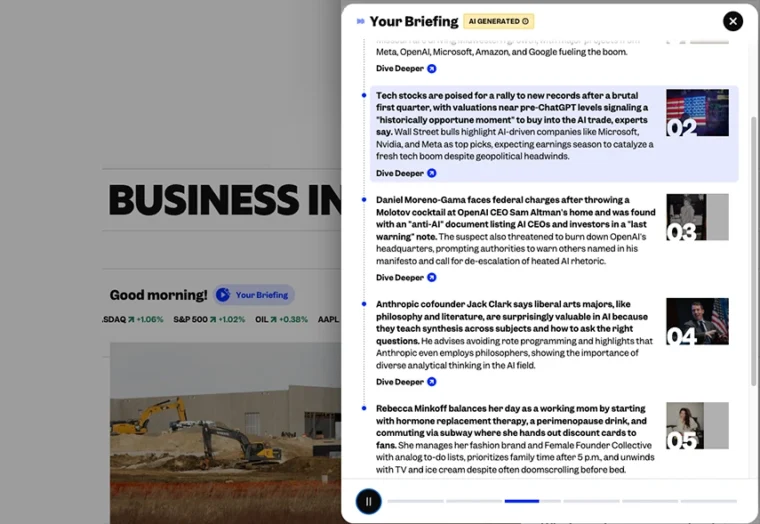
Your news briefing is waiting for you: Business Insider has launched an AI news briefing. You click a button to open up a list of articles and listen to short summaries. If you want to dive deeper, just click.
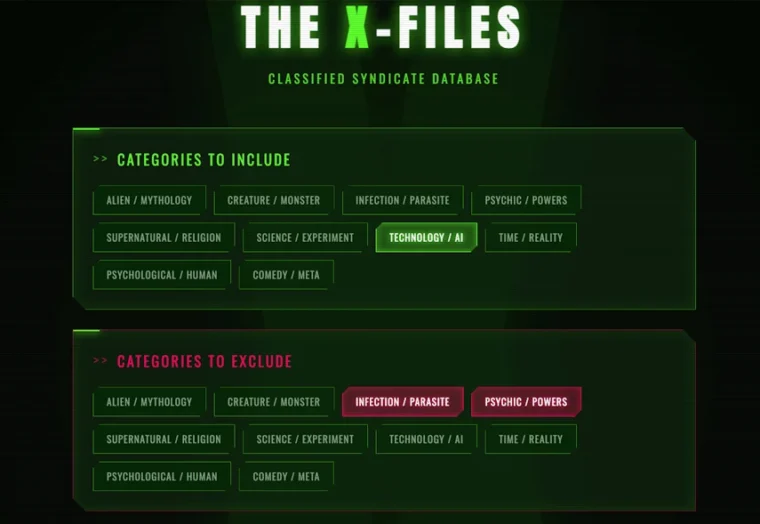
Vibecoding for fun (and not profit): Back in the day, we traded VHS tapes in the mail with copies of the latest episodes of The X Files, the supernatural sci-fi series with agents Scully and Mulder. Let’s just say: We knew someone in the US at one of the Fox affiliate stations in the country who could record the feed and ship a VHS tape in NTSC format around the globe to a nerd in Germany who then transferred the NTSC to PAL. Sorry, I got a little sidetracked here.
The series initially ran for nine seasons and then some, at a time when a season was not six or ten, but 24 episodes. Now, if you wanted to revisit The X Files, where to start? That’s where the X-Files Watch Planner comes to play.
From the vibecoder himself: “I built a thing. Been rewatching The X-Files and I still love it, but there are definitely whole categories of episodes I don’t care about. So I had AI go through every episode, tag each one by genre, then dropped it into a simple site and built a filter for it.”
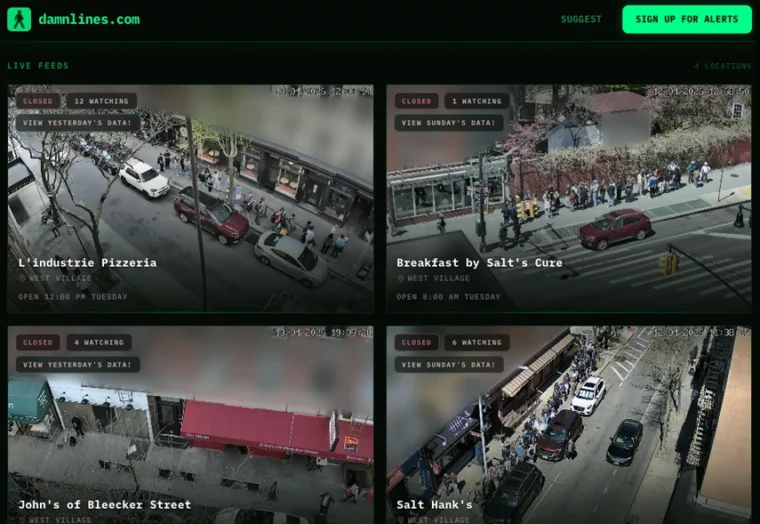
How long is that line: Ever wondered if the queue at L’industrie Pizzeria or Radio City Bakery in Brooklyn is reasonably long? Wonder no more. X-engineer Lucas Gordon announced his “weekend project” damnlines: “We pay tenants across NYC to install an IP camera outside of their unit to monitor the line. It’s not really sustainable, yet.” Europe could never.
Do you know any good vibecoding projects? Built anything yourself? Let me know, hit reply!
One more thing: A very good post on Threads.
This is THEFUTURE.
