/ / THEFUTURE /
In this issue: OpenAI buys a talk show and calls it editorial independence. The New Yorker asks if Sam Altman can be trusted. Monsur Hussain on adoption, sovereignty, and trust in African newsrooms. Plus: how I Claude-coded myself into a loop and blew my API budget.
What we’re talking about: OpenAI buys friendly talk show. Three hours, every day, on YouTube and X. That’s TBPN, a video podcast that treats Silicon Valley as fandom. Where CEOs are celebrated as visionary leaders rather than held to account. (If you’re in Germany, think OMR Podcast vibes.)
Reportedly, TBPN is eleven people. In its first year, revenue was about $5 million with ads and sponsorships. On YouTube, episodes draw a few thousand views. TBPN and its backers claim around 70,000 viewers across platforms. And now, it’s part of OpenAI, for what the Financial Times reports as “low hundreds of millions”.
The press release promises editorial independence. Sure. Then again, it’s hard to imagine any sort of misalignment, paid or not. So what exactly is the money buying besides a niche outlet with hype men and some help with comms and marketing? OpenAI has an answer: “The standard communications playbook just doesn’t apply to us. We’re not a typical company.”
Related: Polygon Labs, a blockchain network company, has invested an undisclosed amount in women‑led Boys Club, a four‑year‑old, five‑person media company that produces crypto‑focused live video podcasts and other content. (Their website is a google doc.) In total, Boys Club has reportedly raised around $7.5 million to date.
What else I’ve been reading:
And now: What is AI doing to journalism? The questions tend to be similar, says Monsur Hussain, who works with newsrooms in Nigeria and Africa: They revolve around adoption, compensation, sovereignty, misinformation, trust, and efficiency. Hussain and I were together in the first AI Journalism Lab at CUNY, and I am very glad that he is the guest of this edition:
Three Questions with Monsur Hussain

Monsur Hussain is a Computer Scientist leading the Innovation team at the Centre for Journalism Innovation and Development in Nigeria.
What's the most important question right now?
For editorial development and strategy, I think the most important question is “what do we want humans to do?” This is a critical question as the AI hype continues to grow. We must decide what tasks must remain human.
What's the most exciting use of AI in journalism?
I think one of the most exciting use of AI in journalism is around media monitoring. Social media monitoring has always been here but AI now makes monitoring broadcast media possible at scale.
What future are you looking forward to?
Looking forward to a future where AI brings shared prosperity and not just benefit the big tech and a few others.
Full disclosure: An email arrived. “Action needed.” I had built a WordPress plugin that watches my bookmarks on Raindrop, grabs new links, runs a few Claude prompts, and turns them into draft posts.
It worked in testing. I deployed it to the production server. Weeks later, I made a small tweak, and with it, the plugin forgot which links it had already seen. Every five minutes, it started treating everything as new.
One day, 320 drafts, 12,321 duplicates, and 1.8 million tokens later, my API budget was blown. Hence the email. I had Claude-coded myself into a loop. I had become an accidental tokenmaxxer with nothing to show for it (except this).
Thanks to a modest spending limit on the API key (and not turning on auto-renewal), the mechanism eventually stopped itself. The damage stood at $8.17. Now the pipeline has new guardrails and a working memory. Claude has fresh credits. Fire away!
Nerd alert: Google has released Gemma 4, its latest open model. It comes in different sizes that run on smartphones, laptops, and bigger machines. Local. No cloud. On Arena AI, the 26B model ranks 40th, ahead of GPT-5.2. The flagship model, 31B, ranks 27th, just below Claude Sonnet 4.5.
If you install one of the Gemma 4 models on your MacBook Air with llama.cpp (seems like ollama is not the best option), you’re running a quantized version (h/t Marcus Schuler). But in this case, the tradeoff doesn’t seem too bad. I’ll keep an eye out for tests and will do some testing myself.
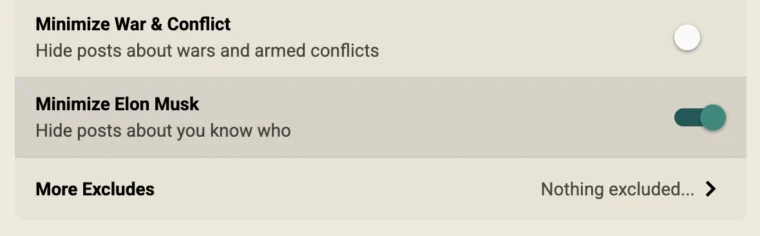
One more thing: I’m still not ready to log back into X to get my AI news. So instead of relying entirely on Threads, I’ve been trying Surf. It’s a new product from Flipboard where you build your own feeds across platforms, Bluesky, Threads, Mastodon, plus podcasts, YouTube, and everything that has RSS. If the platforms are fragmented, your feed doesn’t have to be.
And they have good settings.
This is THEFUTURE.
