Four Questions with Frederike Kaltheuner, AI Now Institute
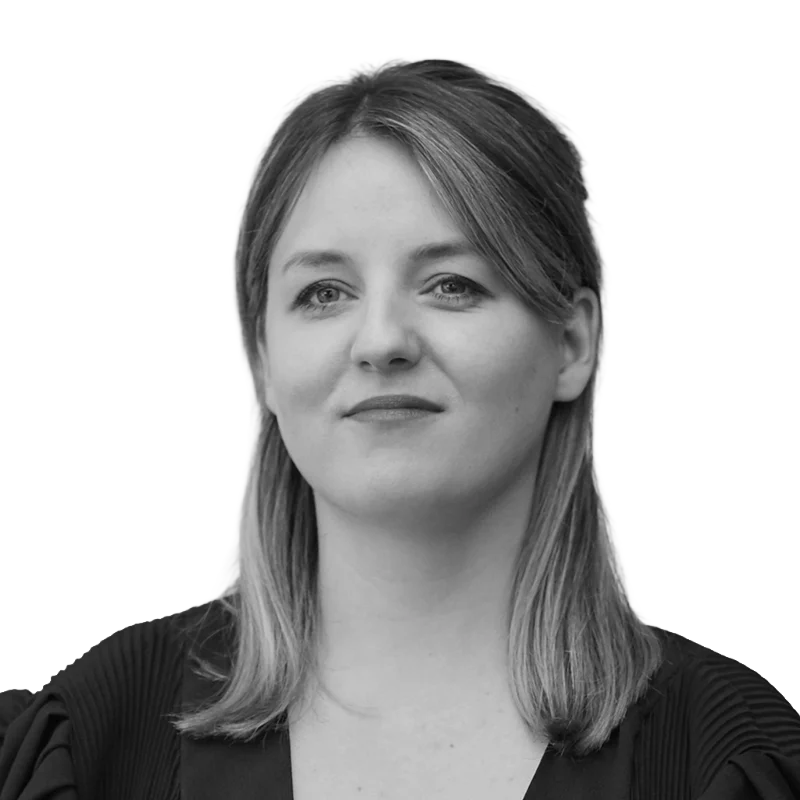
Frederike Kaltheuner is a Berlin-based technology policy expert and adviser.
What's the most important question right now?
How can we avoid a future in which much of our economy runs on the proprietary models of two companies? I don't think that's the most likely outcome, but it's roughly the kind of dominance Anthropic and OpenAI would need to justify their valuations and the debt-financed buildout behind them.
Last year, Anthropic had to spend (!) $2.75 to make a single dollar. (For reference, OpenAI was at -$2.60 per dollar of revenue in 2025.) Anthropic also has $518bn in compute commitments, most of which cannot be cancelled. Again, that's for a loss-making company.
I strongly recommend Ed Zitron's take on the entire market. He's obviously a well-known critic, but he has also taken a really close look at the numbers, which are simply mind-boggling.
Where are we taking AI too seriously, and where not seriously enough?
Let's start with the latter. Despite all this, we're still not taking AI seriously enough. We're focussing on an incredibly narrow set of problems, "rogue models" and speculative extinction risk, when we should be talking about the much more existential transformations currently underway. What will happen to the web as we know it? Will we still have websites when people read the news and go shopping via agents? Will software firms still exist when you can build custom solutions for everything yourself? We've spent a decade studying the effects of social media on democracy, mental health, and children. Are we ready for what's next?
These are serious questions that need a much wider societal debate. Yet we're increasingly treating AI as an exceptional technology around which all other politics (labor, sustainability, democracy) must bend.
What we're taking way too seriously are the narratives and predictions coming out of the dominant AI firms, which make us believe that AI is on a single trajectory.
Two things can be true at once: the AI market is heavily concentrated, and it is also in flux. No technological shift or market correction will, on its own, make Europe a global leader in AI or limit the power of Nvidia and the hyperscalers. But which layer of the stack (applications, models, infrastructure) captures value in the long run is a different question, and one the market has not yet answered (remember, OpenAI and Anthropic are losing money on every client!).
Even the underlying technology is anything but fixed: we simply don’t know if the dominant approach to building AI will continue to be based on ever-larger models trained on ever more data and compute, and run on the cloud. What if open-weight models reach durable parity and models commoditize? What if leading labs respond by moving up the stack into enterprise products and agents? What if inference cost, not training cost, determines where value accumulates? What if the market corrects, and corrects sharply?
These are just some of the questions pointing to radically different futures that each need a solid policy response. Yet, as I have argued with my colleague Leevi Saari, Europe's policy response has been deeply flawed.
If we accept the idea that AI's future is much more open, we also need to accept that it is shapeable. We need to shape this market in our interest. That's no easy task, but it's our only hope. Simply said, regardless of how AI develops, a concentrated market leaves economies and democracies worse off than an open one. That's why keeping the market open and contestable is a necessary condition for AI that serves us.
There's much more that Europe can do, and I've written about this in greater depth in a new report: How to escape a captured ecosystem.
What future are you looking forward to?
As an avid hater of life admin, I am looking forward to a future where I can automate this part of life. We experimented with a locally run model to take care of the mental load at home (it half-worked). I am also looking forward to the disappearance of screens. A few weeks ago, OpenAI ran a bizarre ad in which people sat in a €10,000 Eames Lounge Chair in front of a gigantic screen, already holding their tennis rackets, casually instructing AI to do their presentation. I want the robots to work for me! But can we have this without destroying the planet or handing over our deepest thoughts, desires, and ideas to a Silicon Valley oligopoly, while keeping everything that's genuinely human and joyful (poetry! music! art!) for ourselves?
What's a good website?
Net art by Constant Dullaart from 2010. I miss the internet we had back then.