/ / THEFUTURE /
In this issue: AI is rewriting English, and not in a good way. A new coalition named Spur wants to fix journalism’s licensing mess. Elisabeth Gamperl on building for user intent before tech platforms do. Plus: breakfast as a vector space.
What we’re talking about: This is the future, not a newsletter. When you define something by saying what it’s not, it’s called “contrastive negation.” Nowadays, it’s a telltale of AI writing. You can see it all over Threads and LinkedIn.
At the same time, the bros are feeding chatbots the Wikipedia definition of “AI writing” and telling them to avoid it. The sound of AI writing is “easily fixable,” they say. (If you want to try, here is a prompt.) No more fluffy sentences that go nowhere, no unsourced musings about ifs and whens.
Wait, this could actually be a good thing?
Yes and no. I keep thinking of Kenyan writer Marcus Olang’, who gets told his writing “sounds like ChatGPT,” simply because, as a student in Kenya, he was trained to argue in English in a certain way. When we tell chatbots to fix “AI writing,” we might just tell them to fix what sounds educated.
The reputation of the em dash is damaged beyond repair. Next up on the chopping block: the Rule of Three. Just like journalists, AI is really into the principle that elements presented in groups of three are inherently more satisfying, memorable, and effective. See what I did there? Too bad, it’s over, and journalism schools better take note.
What else I’ve been reading:
And now: When I first asked her to share insights for my newsletter, she was in the process of switching jobs. Now that she is settled in at German news agency dpa, hear it from Elisabeth Gamperl.
Three Questions with Elisabeth Gamperl
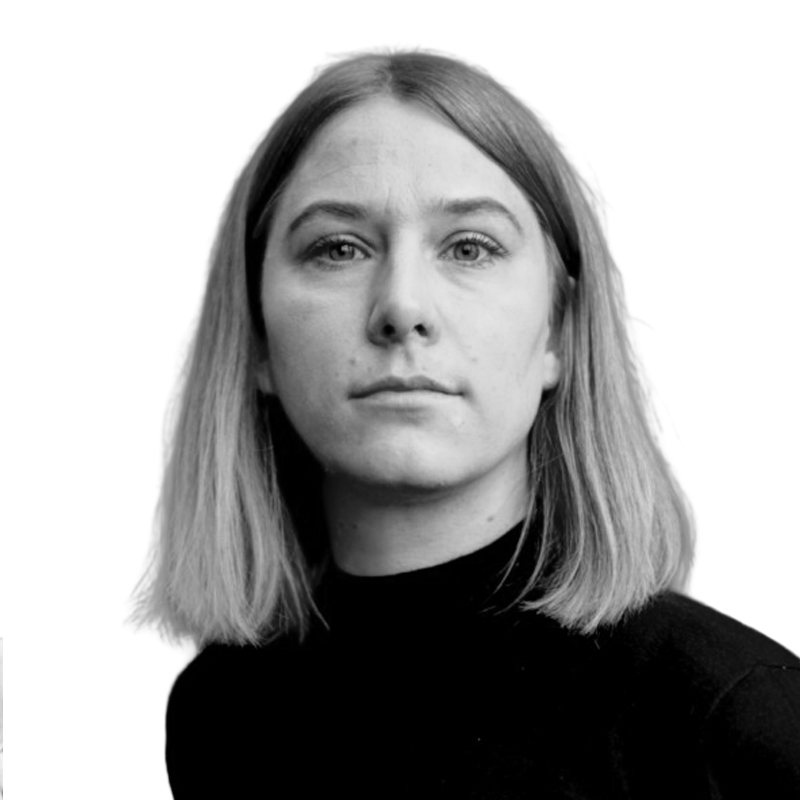
Elisabeth Gamperl manages new editorial products at German news agency dpa.
How can we better understand the current AI hype?
Francesco Marconi’s “Newsmakers” is something of a foundational book for anyone working at the intersection of AI and journalism. It’s a useful reminder that much of what we now describe as the “AI revolution” in media has deeper roots. Newsrooms were already experimenting with automation and machine learning throughout the 2010s. What I appreciate most about the book is that it captures a moment when innovation felt ambitious yet grounded — before today’s gold-rush mentality took hold.
In a more analytical vein, the Ethnographic study “AI Hype and its Function” by Nadja Schaetz and Anna Schjøtt sharpens that perspective. The authors argue that hype isn’t merely noise or exaggeration — it performs a function. Future visions are generative: they coordinate actors, mobilize funding, and legitimize innovation. This lens helps us see AI not just as a technology, but as a narrative force that actively shapes institutions, expectations, and decision-making.
Are we taking AI seriously enough?
Many of us picture the “end state”: AI transforming journalism, changing workflows, maybe even redefining what a news product is. But the crucial steps in between often get overlooked—those are all about user behavior.
I notice it in myself: If a product isn’t immediately intuitive, I instinctively look for a chat field to operate it, just as I do on platforms like Canva. That’s a subtle but profound shift. I don’t think the article as a product will disappear, but we are entering a post-navigation era, where interaction becomes conversational and intent-driven.
That interface, where user intent meets journalism, is far too important to hand over to tech platforms. Shaping and understanding user behavior isn’t something we should outsource; it needs to be at the heart of our own strategic and product thinking. There’s so much potential if media organizations keep evolving their own websites and product experiences, rather than leaving that crucial space for others to define.
And by the way, these questions are highly relevant for us as a news agency: How can we deliver verified information in ways that truly fit our clients’ needs?
What's a good hobby to pick up?
I can really recommend joining nature walks with strangers to observe wildlife. You can’t imagine what or who you might come across. I’m doing an amphibian walk in a few weeks, and sometimes that kind of small adventure is exactly what you need.
Hands on: Just the text. That’s what Defuddle is for: Get the main content of any page as Markdown. It’s a website, a service, and a GitHub repository. Brought to you from the CEO of Obsidian.
Wait, this is actually funny: “The top meme of the week is an AI slop featuring a scene from Tokyo Drift. Everyone is trying to make it as absurd as possible, and it’s working out beautifully.”
One more thing: “Breakfast is a vector space. You can place pancakes, crepes, and scrambled eggs on a simplex where the variables are the ratios between milk, eggs, and flour. We have explored too little of this manifold. More breakfasts can exist than we have known.” (Turns out the dark breakfast abyss is actually IHOP’s secret to fluffy omelettes. But I love the idea of thinking vector spaces.)
This is THEFUTURE.
